When protecting your home, choosing the right CCTV camera is key to peace of mind. But with so many options on the market, homeowners often ask: Which CCTV Camera is Best for Home Security? The answer is not just about the camera model. It is about what you need. Understanding how different cameras work, their features, power needs, and proper installation. Whether you live in a large house or a small apartment, this guide will help you choose the best security solution. At IT Security India, we have helped thousands of homeowners in Delhi and across India. We help them find the best surveillance systems for their needs. Call us at +91-999 972 5655 for a personal consultation. Get great prices on premium CCTV systems.
Why CCTV Cameras Are Important for Home Security
Rising Theft & Security Concerns in Modern Homes
Security for your home has never been more crucial. Recent statistics show that the home security systems market in India surpassed USD 1.85 billion in 2024. This is a sign of growing homeowner awareness. In cities with large populations, the crime rate is much higher than the national average, as is theft, which has become the most prevalent crime. Independent apartments and houses face the same risks. These include burglary, package theft, and unauthorized access. Modern families require security cameras to protect their precious belongings and loved ones at all times.
How CCTV Cameras Protect Families & Property
CCTV cameras act as an effective deterrent to possible intruders. Research shows 34% of burglars enter through the front door, breaking the law. This highlights the need to install security cameras. Beyond security, they provide security 24/7. They record real-time video to help identify intruders. They can also serve as evidence to authorities. With motion alerts sent to your mobile, you’ll be able to monitor your home from anywhere. It doesn’t matter if you’re working or on the road; you can be asleep. The mental peace that comes with knowing that your belongings, family, and loved ones are safe is priceless.
Different Types of CCTV Cameras for Home Use
Dome CCTV Cameras
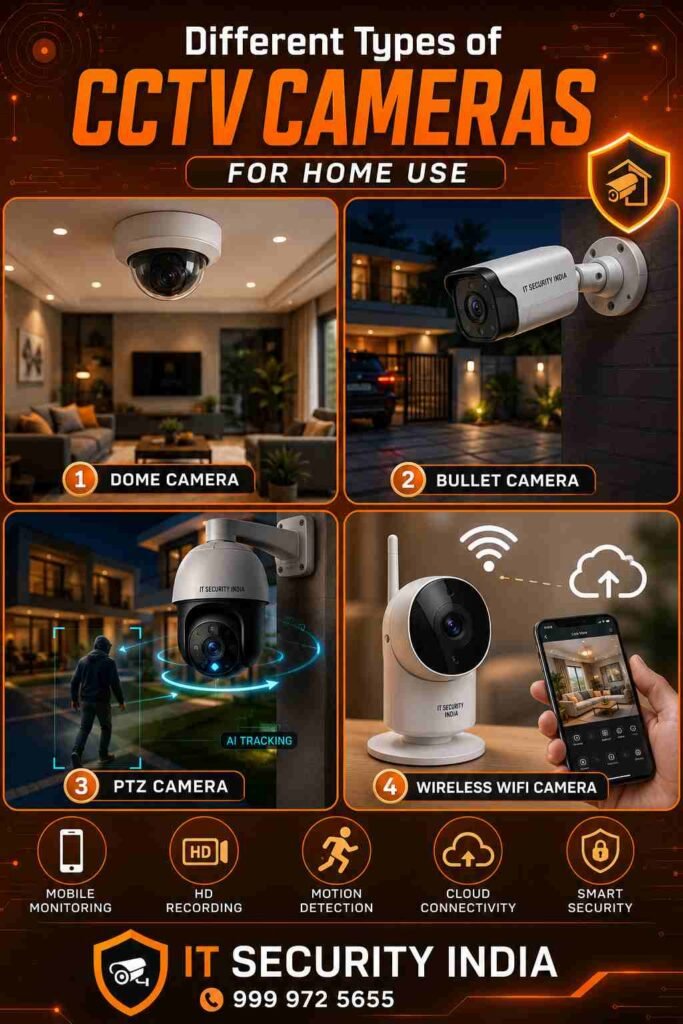
Dome cameras feature a dome-shaped, rounded housing that conceals the lens’s field of view. This is a way to prevent tampering and also allows for a discreet location. Cameras are usually used indoors due to their sleek design, which is a perfect match for any décor. They provide wide-angle views. These cameras allow you to view living spaces, hallways, and lobbies without being obvious. Many dome cameras are waterproof. They’re ideal for both indoor and outdoor use. They are ideal for covered spaces, such as parking areas and balconies.
Bullet CCTV Cameras
Bullet cameras have a distinctive cylindrical shape, similar to a bullet. They are easy to spot and can serve as a deterrent. They are often employed outdoors and are great at monitoring targets over long distances. Their stable, fixed design ensures steady coverage of key areas, like driveways, main gates, and perimeter fences. Bullet cameras are typically more durable and weatherproof. This makes them perfect for Indian conditions with intense sun, rain, and dust.
PTZ (Pan Tilt Zoom) Cameras
PTZ cameras are extremely flexible, offering pan, tilt, and zoom functions. They can be controlled remotely via a smartphone app or a software interface. These cameras can pan left or right, tilt up or down, and zoom in or out. They can provide a live surveillance service for large outdoor spaces. Although PTZ cameras are typically larger and cost more, they can cover larger areas with fewer cameras. They’re ideal for monitoring large open spaces, parking lots, and multi-level properties.
Wireless WiFi CCTV Cameras
Wireless cameras stream video over Wi-Fi, eliminating the need for cabling. They are perfect for apartments, small spaces, or other areas where running wires is difficult or impossible. Modern wireless cameras, such as the TP-Link Tapo C200, offer 1080p HD resolution and pan-tilt control. Additionally, they have motion detection. They also support two-way audio. They are compatible with smart home devices such as Amazon Alexa and Google Assistant. The primary benefit is easy installation. You can set up wireless cameras in a matter of minutes, and without the assistance of a professional.
Key Features to Look for in a Home Security Camera
Night Vision & Color Night Vision
Night vision is not required for home security. Select cameras that have Infrared (IR) night-vision. Make sure they can detect at least 20 feet in total darkness at night. Some models are advanced and have night vision with color. They can capture full-color video even in dim light. They switch to black-and-white only when necessary. This is crucial for spotting intruders or activities that occur while you’re asleep or out of the area.
Motion Detection & AI Alerts
Modern security cameras use smart motion detection. It tells real threats from false alerts. The best systems can detect and tag people, animals, and vehicles separately. This helps reduce unnecessary notifications. AI-powered motion detection from brands like Kent CamEye and CP Plus sends real-time alerts to your smartphone.
It alerts you whenever it detects motion so that you can respond right away. This feature helps prevent false alarms from wind-blown leaves or passing vehicles.
Two-Way Audio & Mobile Monitoring
Two-way audio allows you to talk through your camera like an intercom. You can warn burglars, speak to delivery personnel, monitor your children, or talk to pets that are not in your home. Mobile-based monitoring apps let you view live camera footage anytime, anywhere. Also, you’ll receive immediate alerts about suspicious activities. This live-streaming connectivity offers peace of mind, even when you’re on the road.
Cloud Storage vs Local Storage
Cloud storage helps keep your videos stored online. It’s safe from damage or theft to your hardware. Cloud storage generally requires monthly subscriptions. Local storage is provided using microSD memory cards (up to 500GB), DVRs (Digital Video Recorders), or NVRs (Network Video Recorders).
It stores footage on your property with no ongoing costs. – The best approach is to use both options.
- Use local storage for quick access and lower costs.
- Add cloud backup as an option for important incidents.
Wired vs Wireless CCTV Cameras – Which Is Better?
Benefits of Wired CCTV Cameras
Wired cameras are stable and dependable, with a continuous power supply via a direct cable connection. They have virtually no interference from other devices and provide crystal-clear video transmission. Wired systems offer higher-resolution footage and can operate 24 hours a day with no battery worries. They are ideal for larger spaces that require a wide coverage area and continuous recording. Power-over-Ethernet (PoE) allows a single cable to carry both power and data. It makes installing much simpler.
Advantages of Wireless Security Cameras
Wireless cameras are a triumph in terms of ease of installation and placement flexibility. They can be set up virtually anywhere, with no drilling or carrying cables throughout your property. They are perfect for temporary setups, rentals, and blind-spot coverage without rewire. They can be integrated with smart home security systems. They can also be easily moved as your security requirements change. Wireless security systems offer convenience and ease of installation.
Which Option Is Best for Indian Homes?
For Indian citizens, your choice will depend on the type of property and your priorities. Wired systems are ideal for homes that need steady, full security across multiple sites. Their reliability even during power outages makes them ideal for areas with unreliable power supply. Wireless systems are great for regions where drilling is not permitted. They also work well for rental homes that require flexibility. Security experts typically suggest a hybrid security system. Utilize wired cameras to protect entry points. Use wireless cameras to achieve wider coverage.
Best CCTV Camera Brands for Home Security in India
Hikvision CCTV Cameras
Hikvision is known worldwide for high-quality home security cameras. They offer advanced night vision, motion detection, and AI-based analytics. Their systems are widely trusted for professional security solutions. They also offer excellent after-sales service across India.
CP Plus Security Cameras
CP Plus is a trusted Indian brand. It offers affordable, easy-to-use home security cameras. It also has strong service networks across India. Their systems offer excellent value for money without compromising on quality or features.
Dahua CCTV Systems
Dahua specializes in high-end CCTV systems. They offer superior image quality and advanced security features. They’re known for reliable exterior solutions suitable for harsh Indian weather conditions.
TP-Link Tapo & Smart WiFi Cameras
TP-Link Tapo cameras are popular for home security. They offer 1080p Full HD video, pan-tilt control, motion detection, and two-way audio. They also cost less than many other cameras. Their smart home integration makes them excellent for modern Indian households.
Where Should You Install CCTV Cameras at Home?
Main Gate & Entrance Security
Your front entrance is the most crucial location for your cameras. Set up cameras on the face to clearly record visitors’ names. Avoid direct sunlight since it can create reflections. A camera mounted in the corner, at a height of 8 to 10 feet, gives you a great view of your entryway. It’s also less difficult for someone to alter.
Parking Area & Balcony Coverage
Monitor your parking area to record vehicles, packages, and suspicious activity. Ensure cameras capture license plates clearly. For balconies, position cameras to cover outdoor areas without intruding on neighbors’ privacy. These areas are common access points requiring thoughtful placement.
Living Room & Indoor Monitoring
Indoor cameras should monitor main hallways, living areas, and bedroom entry points. Dome cameras are best suited for indoor use due to their discreet appearance. Position them to cover all movement paths after a possible break-in. This helps ensure full internal security.
Common Mistakes to Avoid When Buying CCTV Cameras
Choosing Low Resolution Cameras
Don’t compromise on resolution to save money. Low-resolution cameras create blurry footage. You cannot identify faces or license plates. This makes them useless during incidents. Always invest in at least 1080p HD resolution, preferably 2MP or higher.
Ignoring Storage & Backup Options
Uncorrected camera angles are one of the biggest mistakes that cost money. Cameras that are too high do not capture facial features. Cameras placed too low can become targets of vandalism. Place cameras 8 to 10 feet high. This helps you capture entry points and faces clearly. Avoid placing cameras right next to bright light sources, as this can create visible glare.
Which CCTV Camera Is Best for Your Home?
Best Cameras for Apartments
Apartments need compact, wireless cameras like TP-Link Tapo C100 or Kent CamEye HomeCam. These cameras need no drilling or wiring. These cameras offer motion detection, night vision, and mobile monitoring in space-efficient designs.
Best Cameras for Independent Houses
Independent houses benefit from combining wired and wireless systems. Use wired bullet cameras at main gates and along the perimeter.
Add PTZ cameras in large outdoor areas. Use dome cameras indoors. Hikvision or Dahua systems provide comprehensive protection for larger properties.
Best Budget CCTV Camera Options
TP-Link Tapo cameras offer excellent value at reasonable prices with premium features. CP Plus affordable range provides good quality without breaking your budget. Kent CamEye models deliver AI-powered detection at budget-friendly rates.
Final Conclusion
Best Recommended CCTV Setup for Complete Home Protection
The ideal configuration includes central gate monitoring using bullet cameras. It also covers parking areas with wireless cameras. It monitors hallways in interior spaces using dome cameras. Additionally, it features a PTZ camera to monitor large, open spaces. This setup provides complete 360-degree security.
For apartments: Use 2 to 3 wireless cameras for the entrance, balcony, and living room. For independent houses, use 4 to 6 cameras for the gate, driveway, main entrance, balcony, parking area, and interior.
Don’t compromise your and your family’s safety. Select cameras with at least 1080p resolution. Make sure you have solid evening vision and motion detection. Use cloud storage to back up. If you want to secure a cozy home or a large villa, there’s a security system to suit your needs.
Ready to upgrade your home security today?
Contact IT Security India for expert advice. Get the best prices on premium CCTV systems.
Call: +91-999 972 5655
We offer consultation, installation, and lifetime support.
Best prices are guaranteed in Delhi and across India.
Certified technicians provide professional installation.
Brands include Hikvision, CP Plus, Dahua, TP-Link, Kent, and more.
Your home deserves the best protection.
Let IT Security India help you find the right CCTV solution today.
FAQs – Which CCTV Camera is Best for Home Security?
Which CCTV camera is best for home security in India?
The best choice depends on your home.
For apartments, choose TP-Link Tapo (wireless and easy to install).
For independent houses, choose Hikvision bullet cameras (reliable and weatherproof). Prioritize 1080p HD, night vision, and motion detection.
Wired or wireless CCTV which is better for Indian homes?
Wired is best for reliability in houses (no WiFi interference, 24/7 power). Wireless is best for apartments (no drilling, more flexible). A hybrid setup is ideal for most Delhi NCR homes.
What features should I look for in a home CCTV camera?
Essential: 1080p or higher resolution, IR night vision (20+ ft), AI motion detection, two-way audio, and storage. Use microSD or cloud storage. Brands like CP Plus and Dahua excel here.
Where should I install CCTV cameras at home?
Main gate (face-level, 8–10 ft).
Parking or balcony (license plate view).
Living room and hallways (dome style). Avoid glare from sunlight and ensure compliance with privacy requirements.
Are wireless WiFi CCTV cameras reliable for home use?
Yes, modern ones like TP-Link Tapo C200 offer 1080p HD, pan-tilt, and app alerts with stable WiFi. Perfect for renters; pair with local storage to avoid cloud fees.
What’s the best budget CCTV camera for apartments in Delhi?
TP-Link Tapo C100 or Kent CamEye HomeCam: 1080p, motion detection, night vision under ₹2,000-3,000. Easy DIY install, no wiring needed.
How many CCTV cameras do I need for full home protection?
Apartments: 2-3 (entrance, balcony, living room). Independent houses: 4-6 (gate, driveway, parking, interiors). Add PTZ for large areas.