Are you looking for the best CCTV camera mounting pole for your home, office, or business? Picking the right pole mount matters as much as the camera. A strong, well-installed CCTV camera mounting pole keeps your surveillance system stable. It also protects it from bad weather. It holds the camera in the right position. This helps you get the best coverage. In this full guide, IT Security India walks you through everything. It covers types, benefits, installation tips, and maintenance. Call IT Security India at 999 972 5655 for the best prices and expert advice.
What is a CCTV Camera Mounting Pole?
Purpose of CCTV Pole Mounts
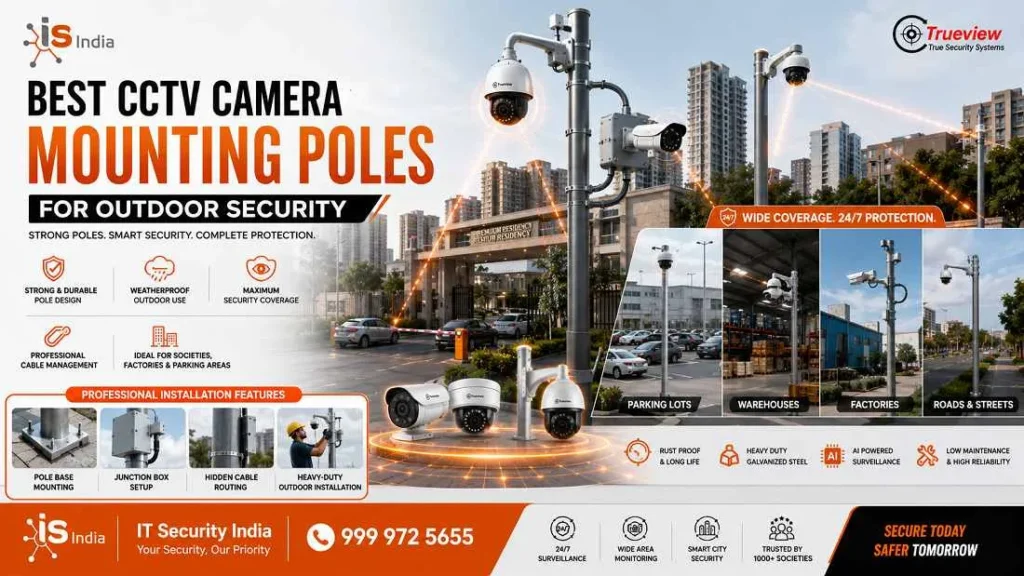
A pole for mounting cameras on CCTV is a vertical support that supports surveillance cameras high up. It offers greater coverage and assists in preventing crimes. The idea of putting cameras on poles provides a greater viewing angle than cameras mounted on walls. It allows you to see through fences, hedges, and other structures. It also makes cameras difficult to reach, which reduces the risk of vandalism and theft.
Where CCTV Mounting Poles are Commonly Used
CCTV mounting poles are used across a wide range of environments. Common locations include parking lots, construction sites, and warehouses. They also include perimeter fencing, retail complexes, and public infrastructure. Public infrastructure includes streetlights and transit stations. They are very important for outdoor installations where wall mounting is not possible or ideal. Temporary deployments at events or remote sites, where no flat surface exists, often use pole mounts.
Different Types of CCTV Camera Mounting Poles
Wall Mount and Pole Mount Brackets
Camera mounts for security cameras come in various styles. Wall mounts secure cameras on flat surfaces, such as the walls of buildings or even building siding, suitable for outdoor or indoor use. Pole mounts are brackets that are specially designed for. They are used to attach cameras to poles that are vertical or pillars, as well as other circular structures. They are typically employed for surveillance outside of construction sites, parking areas, and perimeter security areas. Pole mounts allow you to place cameras in a variety of locations.
They can be adjusted to get various angles. Ceiling mounts are an alternative that is ideal for commercial spaces like warehouses, retail stores, or even offices. They offer a broad field of view that covers vast areas.
Adjustable and Heavy-Duty Pole Options
CCTV poles vary from simple single-camera mounts to integrated towers with multiple sensors. Mounts for fixed poles can be erected by placing the pole on a foundation made of concrete. They provide stability and strength in areas that require continuous coverage. Mounts that can be adjusted allow you to move or alter camera angles when your security requirements change. Segmented surveillance poles are available in three sections of 2 or 3.
This makes the installation and transportation easier. High-end poles made of galvanized steel can handle heavy camera loads and harsh weather. Aluminum poles are less heavy but nevertheless durable.
Benefits of Using CCTV Camera Mounting Poles
Better Camera Coverage and Visibility
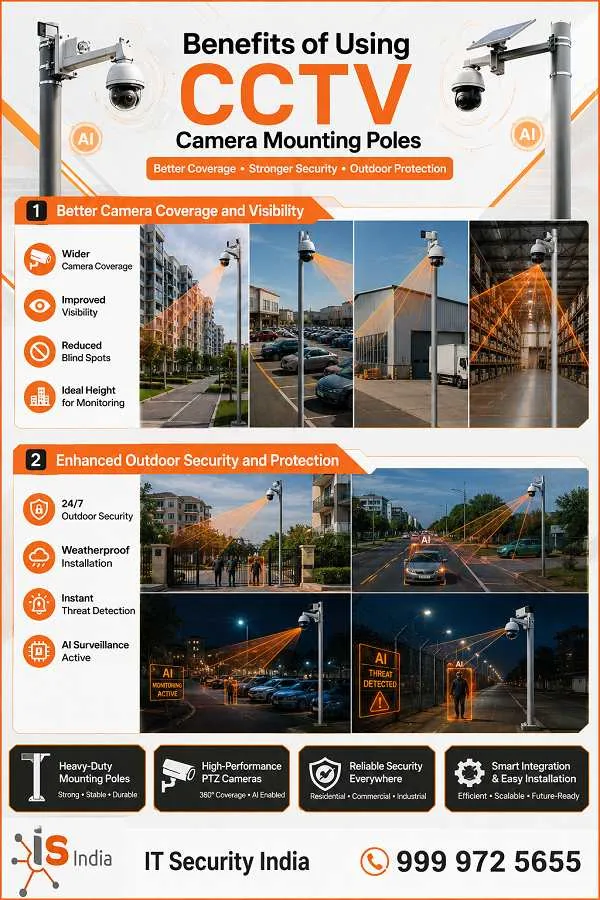
One of the biggest advantages of a CCTV mounting pole is the improved field of view it delivers. Taller poles provide wider coverage and monitor larger areas. Wall-mounted cameras often cannot do this. Standard pole heights of 8–12 feet work well for most parking lots and entrances. Taller poles work best for wide-area surveillance. Poles with adjustable or swivel-joint brackets let you fine-tune the camera angle. This gives precise coverage of your target monitoring area.
Enhanced Outdoor Security and Protection
Poles raise cameras above obstructions and keep them out of reach, reducing the risk of tampering or vandalism. Heavy-duty poles made from galvanized steel or powder-coated metal resist corrosion and stand up to high winds.
They work reliably in extreme weather, making them a durable long-term investment. This rugged design helps your surveillance network keep working, no matter the environment.
How to Choose the Right CCTV Mounting Pole
Pole Height, Material & Strength
The best pole to choose is determined by height and material. Galvanized steel is a commonly used choice due to its durability and resistance to corrosion. Aluminum is lighter but more robust. It’s a good option for areas where lighter-weight alternatives are required. In coastal areas with saltwater exposure, the 316 grade stainless steel is more effective than the standard galvanized steel. Fiberglass poles need no maintenance. They can withstand rust and rot. They are ideal for extreme conditions.
For height, poles typically range from 6 to 30+ feet. Installing poles at 10–15 feet is recommended for the best coverage in most settings.
In large parking lots, 20-foot poles are preferred to maximize range. Taller poles reduce vandalism risk but require stabilization. Always check the wind rating — poles in storm-prone regions should be rated for at least 100 mph winds. Look for powder-coated or hot-dip galvanized finishes to help prevent rust over time.
Compatibility with Different CCTV Cameras
Before you buy, confirm the pole’s mounting bracket fits your camera model. Check if the mount can support the camera’s weight.
Also, check if it allows pan-tilt-zoom (PTZ) movement when needed. For rust and corrosion resistance, select mounts made from stainless steel or aluminum. Also, consider whether you will run wiring inside the pole or outside it. Decide if you need a solar-powered option for off-grid sites.
CCTV Camera Pole Installation Guide
Best Placement Tips for Outdoor Surveillance
The proper placement is essential to ensure efficient surveillance. Cameras should be placed to protect the entrance or exit point, wide areas, and dark areas. If the pole is installed over 20′, add threadlocking adhesive to the bolts and strengthen with a second cable for safety. When mounting a pole, make sure that the diameter of the pole corresponds to the specifications for the bracket. When the pole’s surface has unevenness, apply shims to make a flat mounting base. For areas with high winds, think about the addition of cross-bracing or guy wires to increase the stability.
If you have more than one camera on the same pole, ensure that you leave at a minimum the equivalent of 18 inches of vertical distance between the cameras. This will help prevent interference. Always consider whether you should use the surface-mounted or in-ground option. In-ground provides greater stability, but it requires excavation and concrete foundations.
Safe Wiring and Cable Management
A good cable management system is crucial for a long-lasting, reliable CCTV system. All network cabling outdoors must be run via PVC conduit, tubing made of metal, or cable tray. This shields cables from sunlight as well as water and physical impacts. Beware of sharp curves and twists, especially on Ethernet and fiber optic cables, to keep signal integrity. Make sure that all connections and cables are secured to avoid destruction or loss.
This is crucial in outdoor environments as weather conditions could affect connections. Use cable enclosures or housings to protect cables from damage, weather, and unauthorised access. Label each cable clearly during installation. This makes future repairs and troubleshooting easier.
Common Applications of CCTV Mounting Poles
Residential and Commercial Security
CCTV mounting poles are widely used in both residential and commercial settings. Homeowners’ associations and private property managers prefer pole-mounted cameras.
These cameras give clear views over fences, hedges, and buildings. Wall-mounted cameras cannot always do this. In commercial settings, poles support surveillance at retail stores, office complexes, warehouses, and facility perimeters. Their elevated position makes them a visible deterrent that actively discourages criminal activity.
Parking Areas, Roads & Industrial Sites
Poles are a go-to solution for parking lots, roadsides, and industrial facilities. Standard 8 to 12-foot poles work well for parking coverage. Taller setups suit wide-area monitoring along roads and industrial zones. Utility poles in public spaces can also host cascading surveillance installations. Construction sites and remote facilities often lack wall space.
They rely on portable or temporary pole-mount systems.
These systems can be moved as the site changes.
Maintenance Tips for CCTV Mounting Poles
Preventing Rust and Weather Damage
The long-term durability of a structure depends on material choice and routine maintenance. Steel poles with hot-dip galvanizing can resist corrosion for over 50 years. Check the poles regularly in terms of structural stability, corrosion, and any loose parts. Cleanse surfaces frequently to maintain the effectiveness of coatings. For bolts that are exposed to the elements, replace them every 2 to 3 years. Replace them after extreme weather, because corrosion can weaken the entire mounting structure.
Regular Inspection for Stable Camera Positioning
Make sure you check your cabling and cameras every couple of months. Be on the lookout for broken connections, physical damage, or misalignments caused by the wind or an impact. Finding small issues early can prevent costly failures later. Conduct a stability test by applying pressure gently on the camera in order to test whether it is wobbly.
If you have PTZ cameras, inspect your motor’s gears. Lubricate them in the event that you hear the sound of movements. Photograph your structure at the key places. This is done prior to closing the walls as well as sealing the junction boxes. Place the photos somewhere that is accessible. Later, you can access them for upgrades or maintenance.
Conclusion
Improve Surveillance Efficiency with the Right CCTV Pole Mount
Selecting the best camera pole for your CCTV can improve your whole surveillance system. From choosing the right size and material to safe installation and upkeep, each step matters. If you need a solution for your home driveway, choose the right pole mount.
If you need a solution for a business parking area, choose the right pole mount.
If you need a solution for an industrial building, choose the right pole mount.
It provides strong, weatherproof coverage. It also provides long-range reach to help keep your property safe.
IT Security India is here to assist you in making the right decision. Our team of experts offers affordable prices for the poles for mounting CCTV. We also provide complete installation assistance throughout India. Don’t let your security fall to chance. Contact IT Security India today at 999-972-5655. Find a customized solution that is suited to your home budget and security needs. Our surveillance solutions are easy and reliable. It’s also affordable.
FAQs – Best CCTV Camera Mounting Pole
What height should a CCTV pole be for home use?
For most homes, 8–12 feet gives good coverage.
For entrances and yards, 10–15 feet works best.
Taller poles, 20+ feet, fit large properties or public areas.
Which pole material is best for outdoor CCTV installations?
Galvanized steel is best for strength and corrosion resistance. Aluminum is lighter. 316 stainless steel is best for coastal areas. Fiberglass is low-maintenance in extreme climates.
Can I run cables inside the pole?
Yes. Internal cable routing protects wiring from weather and tampering. Ensure the pole has space for the internal conduit. Plan for service access points.
Do poles need a concrete foundation?
In-ground poles often need concrete footings for long-term stability. Surface-mounted poles can use base plates and anchor bolts. They may still need extra bracing in windy areas.
How do I prevent pole-mounted cameras from being vandalized?
Install poles at a safe height. Use tamper-resistant housings and locks. Run cables inside the poles. Add anti-climb features or security cages if needed.
Are pole mounts compatible with all camera types?
Most pole mounts support common camera mount standards. Check the load rating and PTZ bracket fit. Also, confirm any mounting adapter needs for your model.
What maintenance is needed for CCTV poles?
Inspect mounting bolts and brackets each year. Check for corrosion or paint damage. Ensure cable seals are intact. Re-tighten fasteners after storms. Clean camera housings and lenses as needed.