Choosing the right UPS for CCTV cameras can make the difference between recording an intruder and seeing a blank screen. Both mini UPS and standard UPS units keep cameras running during power cuts, but they suit different setups. This guide compares both options in detail so you can pick the right one for your home or business.
What Is a Mini UPS for CCTV?
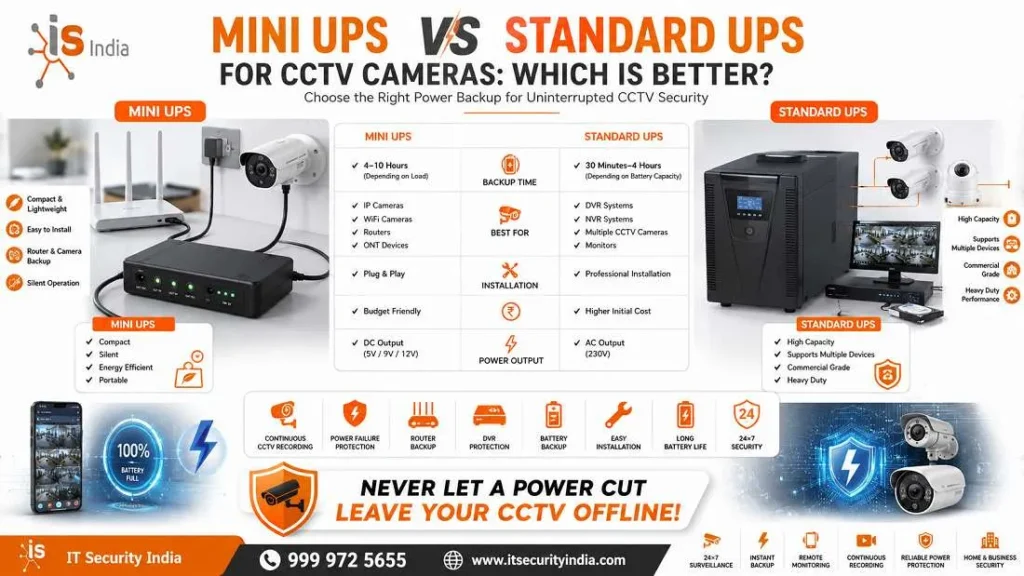
A mini UPS, also called a Mini DC UPS, is a small backup power unit. It is built for low-voltage devices. These include single cameras, routers, and small DVRs that run on 12V.
How a Mini UPS Works
A mini UPS is able to charge its battery even when mains power is running. It instantly switches to battery when power goes out without a delay in reboot. In contrast to a complete AC UPS, it does not do the AC-to-DC-to-AC conversion and instead feeds DC directly to the camera. This is more efficient for smaller devices that are low in power. It also prevents loss of energy caused by double conversion.
Best Use Cases for Mini UPS
Mini UPS units work well for single cameras, home routers, and one or two low-power devices. They can share the same 12V line. Some models support up to 3.5A output. This is enough to run a router and a 12V camera. Use a splitter cable. You can get 8–14 hours of backup, depending on the load. They’re ideal for homes, small shops, or anywhere space and budget are tight.
What Is a Standard UPS for CCTV?
A standard UPS is a full-size AC backup unit. It powers a full CCTV setup. It can run the DVR or NVR, a monitor, and many cameras.
How a Standard UPS Operates
Standard UPS units are available in online and line-interactive double-conversion models. Line-interactive models regulate the voltage and switch over to batteries when there is a power outage. Online units run equipment with power that is continuously converted. This means there is no time to switch over and protects against most power-related issues. Sine wave output is preferable over pseudo-sine waves. Pseudosine power can cause flickering and recording problems on sensitive cameras.
Suitable Applications for Standard UPS
A 650VA unit can run a 4-channel system for about 30 minutes. A 1200VA unit can power a 16-camera IP system for about 30 minutes. Most small-to-medium setups use a 1500VA UPS. It provides 18 to 24 minutes of runtime for a 4-camera system. Standard UPS units work well in offices, shops, warehouses, and similar setups. They also suit systems with a DVR or NVR and multiple cameras.
Mini UPS vs Standard UPS: Key Differences
Battery Backup and Runtime
Mini UPS units run single low-power devices for many hours since the load is small. Standard UPS units power heavier loads, like a DVR/NVR and several cameras.
- So the runtime is shorter.
- At full load, it is usually 15 to 25 minutes.
- That is enough to handle short outages or shut down safely.
Power Capacity and Camera Support
Mini UPS units typically output 1A to 3.5A at 12V, enough for one or two cameras. Standard UPS units are rated in VA (650VA to 1500VA and above). They can power a full multi-camera system and its recorder.
Size, Installation, and Portability
Mini UPS units are small and lightweight. Some weigh under 1 kg. They are plug-and-play, with no wiring skills needed. Standard UPS units sit on desks or in racks. They need proper cabling and outlet planning. A technician should install them.
Cost and Maintenance Comparison
Mini UPS units cost less upfront and need little maintenance. Standard UPS units cost more. But they often include multi-year warranties and higher-value equipment protection. This makes them worthwhile for larger systems.
Which UPS Is Best for Your CCTV System?
Home CCTV Installations
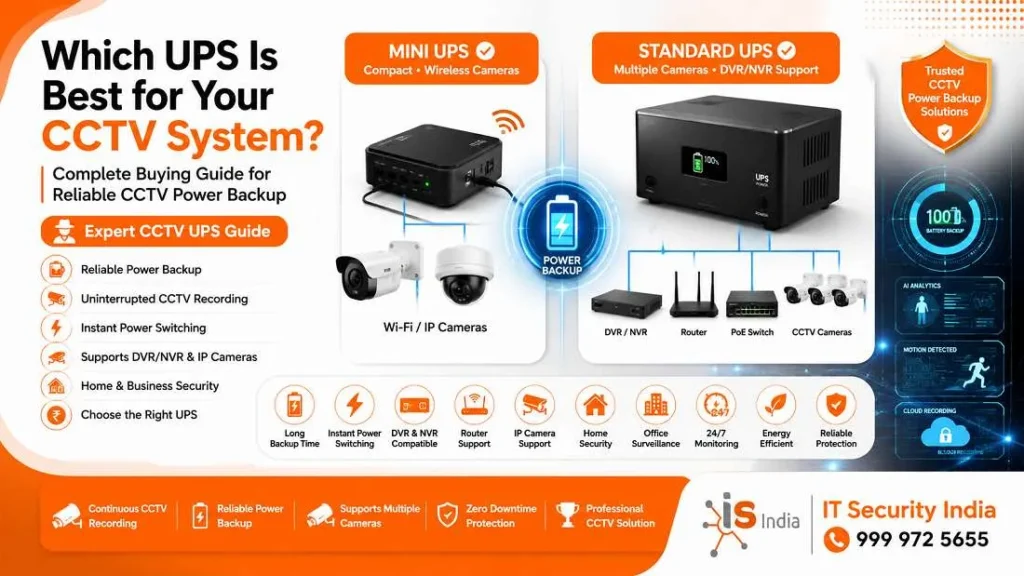
A mini UPS is usually enough for one to two cameras or a single router-camera combo at home.
Offices, Shops, and Commercial Security Systems
Businesses using a DVR/NVR with multiple cameras need a standard UPS. Choose a 1500VA or higher UPS with sine-wave output.
Choosing Based on Power Requirements
Add the wattage of each camera, recorder, and network device. Match that total to the UPS VA rating. Add extra headroom for safety. This prevents undersized backups that drain too fast.
Benefits of Using a UPS for CCTV Cameras
Continuous Surveillance During Power Cuts
Instant battery switchover means no gap in recording when the grid fails.
Protection Against Voltage Fluctuations
Built-in voltage control and sine-wave output protect cameras and recorders from surges, brownouts, and spikes.
Improved System Reliability and Equipment Life
Avoid sudden shutdowns to protect hard drives and recorders from damage. This helps your CCTV system last longer.
Frequently Asked Questions (FAQs)
Can a mini UPS power multiple CCTV cameras?
Yes, but only if the total current draw stays within the unit’s rated output. All devices must also run on the same voltage.
How long does a CCTV UPS battery last?
A mini UPS can power one low-power camera for 8 to 14 hours.
A standard 1500VA UPS can back up a 4-camera DVR or NVR setup for 18 to 24 minutes.
This is at full load.
Which UPS is better for DVR and NVR systems?
A standard UPS is the recommended choice for DVR and NVR systems. Size it with at least 30% headroom over your calculated load.
Is a mini UPS enough for home security cameras?
For one or two cameras at home, a mini UPS is usually sufficient and far more cost-effective than a full-size unit.
Conclusion: Choose the Right UPS for Reliable and Uninterrupted CCTV Surveillance
A mini UPS works well for small, single-camera setups. A standard UPS is built for full CCTV systems. It supports a DVR or NVR and multiple cameras. Picking the right one keeps your footage safe. It also keeps your system running during every power cut.
Which UPS fits your setup? Call IT Security India at 999 972 5655 for the best price and expert guidance on choosing the right UPS for your CCTV system today.